de/construction is a new digital (seasonal) and print (annual) journal that will publish art, artist-curated context, and culture-related content for art and culture enthusiasts around the world.
art
poetry, fiction, photography, painting, drawing, woodcut, sculpture, textile/fabric art, etc…
artist and artistry
by whom, where, why, and how art is made - creator, environment, thesis, architecture, execution
culture
galleries, museums, exhibits, events, orchestras, bands, concerts, small culture-oriented retailers and centers, coffee and tea shops, thrift shops, craft shops, clubs, and similar culture-oriented enterprises interested in art and of interest to artists
Why de/construction?
“What the world needs now is another poetry journal.” - Cracker, 1992, paraphrased.
There are many poetry and creative writing journals. There are fewer visual arts and/or crafts journals. There are many culture-oriented websites, typically focusing on a genre or locale.
There is very little overlap among the three, even though people who read tend to enjoy visual art and generally like to engage with culture in many forms – frankly, they also like going out for coffee or tea, perhaps after visiting a gallery or antique market – perhaps while on vacation in another city. At the same time, culture-vultures tend to like the arts, or at least the idea of the arts – even if the arts (especially poetry) may at times seem unapproachable – a problem for which we have a solution (keep reading). We intend to integrate art and culture, the different segments of the creative community with each other and with the broader cultural community, and to provide a broad readership base of poetry, fiction, visual art and culture enthusiasts with a stimulating and engaging experience.
We also intend to provide readers with context for the art presented, and for the artist - this will be curated by the artist.
Most literary journals do not allocate much time or space to allowing the writer to discuss her background, where she lives and has lived, and so on, or the purpose and/or method in her writing. A few journals offer criticism, or brief commentary or adulation, and I recently read one analysis by the editor of a “minimalist” poem that he had published. But for the most part, there is just the poem.
Some may contend that this is how it should be, because the poem should “speak for itself,” and because the metaphor, if it is not immediately picked up, must be a failed metaphor.
We disagree. When you visit the Louvre, or the Musee d’Orsay, or the Prado or the Met, is it just the painting? Has the general public’s capacity to understand the metaphor increased or decreased over the last few generations, as we have become more STEM focused, computer-focused, and fast-paced?
Exactly. With all of the paintings, even portraits, there is some degree of explanation. Little clues. Because you don’t know everything. But, the clues just point you in a direction - like a hint in a discovery room. And as in a discovery room, the act of discovery, the active participation, brings a fuller understanding of and deeper engagement with the piece.
To continue the analogy, you may even take a docent-led tour where more detail about technique and the artist’s background, the history of the piece, are provided - and these provide a richer experience and a deeper understanding of the piece, and perhaps other pieces by the same artist and/or from the same period.
The gears start to turn. You may then have an epiphany concerning an entire art movement or a period in history, when you think it through, see the connections - which often requires clues.
Why go through this? Why do more work in your free time? Because that is what art is.
That is the entire point.
Sometimes the main points can be gleaned simply by maintaining an active, curious mind through the process. Asking “why?” and bringing some general knowledge. But it is never just a representation of a person, a flower, a ship. There is always more. The painting works as a representation of whatever is depicted - but there is always at least one additional answer to “what is it really saying?”
Poetry is no different.
One could attempt to write or publish poetry for which there is no additional answer - simplify the product, rather than provide some context for complex product - but then it would cease to be poetry.
This is how we will make poetry more approachable, for non-poets and non-writing-folk in today’s faster-paced, and often thinned-down, cultural environment – not by thinning out the content but by slowing down, providing high-quality content, and providing a schematic to a few samples of the poems, and an overview of the writer’s approach.
We will not be the only journal publishing complex poetry that “shows” rather than “tells,” or publishing poems in which the narrator is not always the writer. Nor will we take credit for the resurgence of complex poetry, against a backdrop dominated by “Confessional” poetry and “Sincere” (Confessional, with more feeling) poetry. “Peak Confessional” - or in our view, Peak Fauxetry - was probably reached a year or two ago.
But we may be the only journal that presents that product with the process and context, and with complementary art and culture, and that presents the artist, and the creators and purveyors and venues of culture, all in one mix. We may be the only journal that does so and then defines “culture” broadly enough to include an independent bookseller or coffee or tea shop.
Readers who enjoy consuming poetry will have complex pieces to read, as well as context for all, and comprehensive road map to some, of those pieces and the ideas behind them.
It will work the same way with other artists and their art: readers will get to know what brushes, lenses, fabric the artist uses, what her thesis is, what her process is, and see how her creative theory and process combine to form a creation. The reader will have a sense for how the artist views the world, approaches her work, and operates as a person - details like, does she paint at night, or only on rainy days when she cannot hike or fish, etc…., help personalize the art, make it more relatable. If the reader does not want that level of connection - just wants to lose himself in a photo of a heron on the beach, he can do so and not read the “liner notes.”
The same approach will apply to other genres, which are just as important, as is the mix. It may be that a “poetry first” journal becomes known for, say, its photography or textile art, as much as for the poetry. We think that the combination is the most important and unique attribute of our approach, and that the juxtaposition of all of these art forms in one journal, with features related to a culture-oriented lifestyle, will make all of these artistic genres more accessible, and more impactful than any of them would have been alone. We also think that construction is construction - poets and poetry aficionados will learn much from an explanation of the weaving or knitting or painting or woodblock print process, and vice versa.
That is the answer to “why de/construction?”
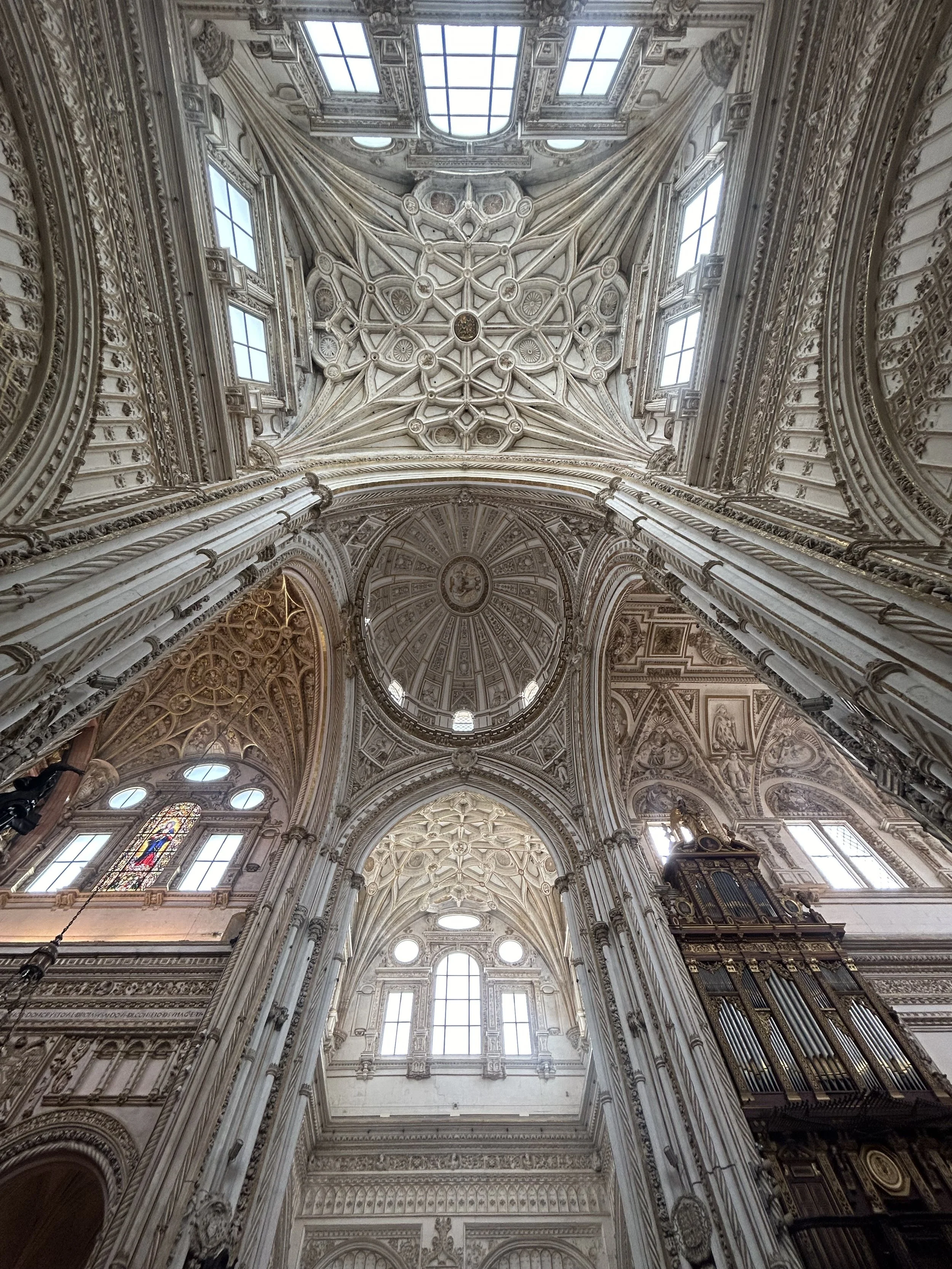
How will de/construction work for the artist?
CONTENT, LANGUAGE AND GEOGRAPHY:
We will publish poetry, fiction and visual art from anywhere and everywhere in the world, with substantial context provided with respect to the art and the artist, as well as a Showcase section in which the artist presents her background, work, thesis, method and at least one schematic/dissection/process flow of a piece or pieces of her work.
Written pieces, context for all pieces, and Showcase sections will be presented be in English. We intend to expand our language capability very soon.
SUBMISSION CATEGORIES AND TENTATIVE RATES:
Poetry - 3 poems (10 pages) max, $5.
Translation - We do not accept translations at this time. We are working with prospective translation editors to enable us to publish translations of original work by the submitter or by other poets and short fiction writers, into English.
Showcase - $15. Design however you want. Generally, include bio, samples, thesis, method/process, breakdown or dissection of one or more pieces as a demonstration. This will include visuals. Send in one PDF and provide contact information, as we will need to reach out and coordinate re: image and text files.
Showcase submissions that are not selected for a near-term Showcase will automatically be considered on a piece-by-piece basis for regular contribution purposes. We will contact you to confirm availability.
Fiction: under 2,000 words $20. Please provide very brief synopsis.
Longer fiction: $25. Please provide brief synopsis.
Hybrid: under 5 pages, please submit as Poetry (see above), 5 and up, please submit as Fiction (see above), and please note in the submission that it is a “Hybrid.”
Epic Poetry - Use the Fiction portal and label the submission “Epic Poetry.”
Ekphrastic Poetry - Send as a Showcase. We will need to determine rights to all pieces represented, and this could delay publication by a quarter.
Visual: Photo of textile/fabric art, painting, sculpture, etc…. 3 pieces, $5, same as Poetry [image file, format TBD]
SUBMISSION PROCESS:
Submission portal will open in January 2027 for issues that will begin in February 2028.
Submission window will thereafter be open permanently, on a “rolling” basis.
There is no reason to wait to submit in the Showcase column for work other than poetry.
Some issues may include more than one Showcase. This is likely, once we get a rhythm going.
We will establish submission portals through one or more of the leading vendors - this has not been decided yet, and we expect to open submissions in September for a mid-February “Season One” minimalist issue and an April “Spring” issue. We believe that that late winter / early spring period when the weather isn’t quite still winter and yet isn’t quite spring is its own season - which we call “Season 1” because it is the first season of the new year, and because it mimics the first season after humans were banished from Eden - the first such season for humans and for Eden. It tends to be the time of year in which people spend the least time outdoors (and in which, as a result, the outdoors are often devoid of people).
EDITORIAL HIGHLIGHTS / WHAT DISTINGUISHES DE/CONSTRUCTION FROM OTHER JOURNALS, APART FROM THE JUXTAPOSITION OF WRITTEN AND VISUAL ART, ARTIST-CURATED CONTEXT AND CULTURE:
Most of the below is more germane to poetry, but it applies to all categories.
We will gladly accept reprints, of poetry and visual art if the artist retains all rights and provides the name and location of the journal(s) that published the piece(s) earlier. As such, sim-subs are allowed, and if another journal selects your piece first, or your piece is selected by what you consider to be a good-for-your-career journal, we can defer your piece until their rights expire. Why? Because even the “top” journals will publish it once, and have a small readership, and having been published should not mean that your poem has to go into purgatory until its soul rises up in the form of a chapbook.
We will not run the journal as if it is the arts equivalent of our record album. We will not decide midway through a reading period that, based on submissions we have accepted so far, we will make next season’s issue a themed issue. If there are five poems about the color Orange, and we like them all, that will not make the issue the “Orange” issue, such that if you later submit a better poem that invokes the color Red, it would be declined.
The same goes for form. That we accepted someone else’s pantoum has no effect on whether your pantoum will be accepted. Nor will we accept or decline a poem because it is written in whatever form is that year’s “new kale,” or last year’s kale (“couplets are so 2025, hahaha”). These are poems, not shirts. If the new kale is or old kale was ghazal, but ghazal is the right form for your content, and you execute it well, then we have no objection. Nor will we lump all the triolets, Sicilian octaves or concrete poems together. Our philosophy is that the form should embody and align with the content, and that there are no limits to the content that artists can produce. So, how could we prefer one form over another? For concrete poems, if we have difficulty with formatting, we may just publish as an image, but that extra work will not impact acceptance vs decline.
More Background Content. Every artist will have more than the usual amount of space to discuss her background, hometown(s), influences, thesis, and/or the story behind the piece, plus pub and/or exhibit history, even if she is not featured in a Showcase, or has in a previous edition been featured in a Showcase (see below).
Emphasis on the Artist, Not Just the Art: We want to give the artist an opportunity to build her image, her brand, her fan base. Send, for example, up to three artist photos for potential publication. A headshot, a candid in your natural environment, a visual or your studio or desk, or bookshelf… the choice is yours. We may use all, two, or one of them, but generally there will be more exposure, more engagement with the readers. This way, artists will get to provide some liner notes and visuals, not just a few songs. It is also perfectly fine if you do not want to provide photos. It is your brand - we merely give you the opportunity to share and develop it.
Showcase: Poets and visual artists will be able to submit a longer exposé to be presented in a Showcase section, in which you will have an opportunity to discuss your thesis in greater depth, and your method and execution - take us through a few of your pieces and show us the mechanics - how does the poem work? We can collaborate with you in terms of suggestions, questions to ask yourself, etc…, but this is your piece - ideas, formatting, etc…
Poetry-first is not poetry-exclusive – we will feature poetry showcases in at least two editions per year and also leave room for other artists. All artists are encouraged to provide context and backstory in regular and Showcase submissions, and non-poetry showcases will be considered for publication beginning in Summer 2028 (after the Season 1 “ep” edition and the Spring 2028 edition).
Do not submit a pitch - submit a Showcase. It is worth the exercise to organize and orient yourself even if you do not end up publishing the Showcase.
Fiction showcase is more challenging due to space considerations. And fiction will have the largest allocation in the annual edition - the “third heat,” to quote 30 Rock’s first episode. And flash fiction is very well-represented already in other journals, which is great, but also means that there is not a flash fiction problem in need of solving. Fiction showcase will likely be introduced after a few years and may focus on writers who have already been published in our journal, so that the reader can engage with the new piece and those pieces.
Publishing Schedule Flexibility:
If you have a slate of poems, photographs, paintings or other pieces accepted for publication or exhibition in one upcoming quarter and you want to keep the momentum going afterwards, we are happy to accommodate - state that in the submission package (“please consider this piece / showcase for Fall, or Winter, 2027, or 2028, as I have publications coming out in spring and summer and would like to keep the flow going”). If it is accepted somewhere else, we can wait that much longer. In such a situation, feel free to send a sample of what you’re already publishing, plus a new piece, or to just send the new piece(s) - your choice. We understand, having been in situations where we feel like Phil Collins in the mid-1980s - everywhere for a while, which creates anxiety about not being everywhere at the same time, or maybe being nowhere for a while, because of timing. The next season’s edition, with other artists featured, feels like the day after your birthday, doesn’t it? We will help you space/time this out, according to your needs.
Many journals will do this for established artists, which is why actual acceptance rates are lower in many cases than what is posted on websites. “My client has a book coming out - I need a 3-4 poem feature to create some buzz,” or “I’m established-writer-X, you’ve heard of me, my poems were in ten journals from March through May, but there’s nothing else lined up until next January, so can you get a few poems into your August or September issue? That way you get to publish a well-known poet.” We will do this for you on the way up, and you do not need an agent.
Emphasis on Regular Contributors:
We understand and laud most journals’ desire to use their platforms to get as many writers as possible published. Most journals try to achieve this objective through a post-acceptance blackout - once you’re accepted, you’re asked to refrain from submitting new material for a few quarters or years. We plan to do the opposite.
We actively want to build a roster of regular contributors, and an audience of regular readers. This will provide a level of consistency and familiarity for contributors and readers alike. We also understand that, when publishing in an ecosystem dominated by independent journals seeking a “vibe” that may or may not be the writer’s typical vibe, and by academic journals with a low publishing frequency (typically annually or semi-annually), an artist may “run out” of places with which her work is a “match” or “fit.” Our basket will be much broader than most independent journals’ “vibes” and we think that once there is a match among an artist, a medium and an audience, it is logical to maintain that by keeping the people involved together. This is unlikely to translate into the same writers every quarter, but it should translate into a writer or visual artist being presented a few times a year. This will enable the artist to build and maintain an audience, and enable the audience to become familiar with an artist’s body of work.
We will also do this for established writers if they desire, and in a way that does not take space from other writers. We are not staging a rebellion or carving out an “alternative” identity in terms of writing - like the high school sophomore who stopped listening to Punk Band X or New Wave Band Y once they became popular.
It is perfectly fine to submit in different categories - just mention this in the submission. There is no discount - we still have to read all the submissions.
Other Notes:
We do not “read blind.” However, “pedigree” is not a factor determining acceptance, and you can structure your pub history however you want. Frankly, we view a diverse range of publications, as well as forms and narrative voices, as positive. So, it is ok to “list them all.” But have no fear, we’re going to “get it” from your work and your context.
Not all content featured in our online seasonal editions will make it into the print edition. This is primarily due to the fact that the print edition will be more fiction-oriented than the seasonal editions. We will emphasize longer fiction, b/w photography, a sample of the year’s poems, and a sample of other art and culture that has not become stale (e.g., a “Spring 2028” edition section about an exhibit running through September 2028 would not likely be repeated in the annual, though a brief retrospective coupled with preview of future exhibits and an overview of the gallery might work).
We will not launch a poetry anthology - there are already several good anthology producers as well as other journals that produce a themed anthology from time to time. We are not here to fill a void that does not exist. We may one day issue an anthology of selected works that have already been published with us and have some correlation to each other, if such a concentration develops over time - like, Italian forms, or French forms… with related art, or concrete forms, from the prior five or six years, presented alongside sculpture or textile, or woodcut.
Whether we ever launch a fiction anthology separate from the annual editions is a function of the submission rate and composition (if we are inundated with 60 stories about a similar geography, and 40 of them are fantastic, but we have room for six, this is the type of scenario in which we could see a themed fiction anthology happening, and we would RFP for a few topping-off entries).
Submissions will be limited in scope and size, but there will be unlimited submissions. Yes, this involves more payment, but, again, we have to read all the submissions.
We will indeed read/view all the submissions. We do not intend to cap submissions - we can lengthen an online edition or push to a later edition if space constraints require this.
CONTENT GUIDELINES:
We do not do current-events political. It is not our trade.
Social commentary, yes, we are interested, but remember, “show me, don’t tell me.” Don’t write a screed that lectures us about homophobia, for example, and tells us that it is bad. Write a narrative, a story, paint a picture - that on the surface could be a few things, at least at the beginning, but that, in the end, leaves us at the end realizing just how harmful, and unnatural and counterproductive, homophobia is. See the difference? The latter is much more powerful.
A note on sexuality: we will not market this publication directly to people under 18, and we think that sex and sexuality are part of human existence - and are not solely for reproduction. For some reason, other art forms accepted sex and nudity a long time ago. Take a walk through the Musee d’Orsay, and tell me why Olympia is on the wall, and why that level of provocation does not belong in a story? That said, do not send graphic painting or photography or overly graphic or tawdry writing. We are doing this to fill voids, and there is no such void with that type of writing - there are other venues for it, and some of them are very good. If discussing a sex act, or describing behavior that mimics a sex act, serves a purpose in the piece, then yes, we want that. The last word on sexuality is that the writer or visual artist should employ the subtlety and nuance that she employs with respect to any other subject. If the quality is there, we will not shy away from it.
A note on seasonality: we may respond that we want to publish a seasonal poem during or approaching a season. Conversely, if you put the finishing touches on a spring poem but it is June, you can feel free to submit when it is ready and ask us to hold off until Season 1 or Spring of the following year. And if someone else picks it up, and we have already accepted it, then we are fine publishing it later as a reprint, either when in season or when next in season. We will not assume that receipt of crocus poem in April means that your crocus poem is the verse equivalent of the beer recipe that became Corona after nobody else wanted it. Even if it made the rounds and nobody picked it up, that may have been because other journals approach some or all of the above matters from the opposite angle. Our own acceptance and rejection history does not align with the purported “hierarchy” in any way, so why should anyone else’s?
Lastly, we want poetry, fiction, visual art, and cultural material from individuals who are members of underrepresented communities. You can, but we do not ask or expect you to, write about life as a member of that community, or write about the plight of that community, etc… Write what you want to write. Photograph what you want to photograph. We seek to provide an opportunity for true representation – representation with no conditions.